About Delisted
What is Delisted?
Delisted 2023 is a creative communal emergent project engaging the extinction crisis.
Delisted 2023 recognizes that cultural, social and political ruptures between and among humans and nonhuman beings drives this and other crises. It approaches healing these ruptures and metabolizing ecological grief through relational and communal creative expression. By centering nonhuman others and the more than human world, Delisted 2023 provides a means for people to encounter the strangeness and beauty of these others in all of their dignity and autonomy.
Additionally, Delisted 2023 operates explicitly through engaging structures of power, particularly the law, and aims to provides ways to disrupt the anthropocentric and extractive nature of western law through creative disruption and countering legal narratives that strip away the inherent dignity of nonhuman and more than human beings.
Delisted 2023 is a creative and cross-disciplinary project but it rests on deeply rigorous understanding of knowledges and practices including de-colonial approaches to biology, ecology and evolutionary, as well as freely shared Indigenous Knowledges.
Delisted 2023 began in January 2023 with an ongoing tributary project for the members of 34 species, subspecies and morphs (collectively “species”) of plants, and nonhuman animals. Artifacts from the creative work of more than 40 artists, writers, and musicians honoring these species and the other members of their ecological world will be published by The 3rd Thing Press in fall 2026, and included in an installation in Seattle, Washington at the same time. This website will host works and information dedicated to these species over the next year.
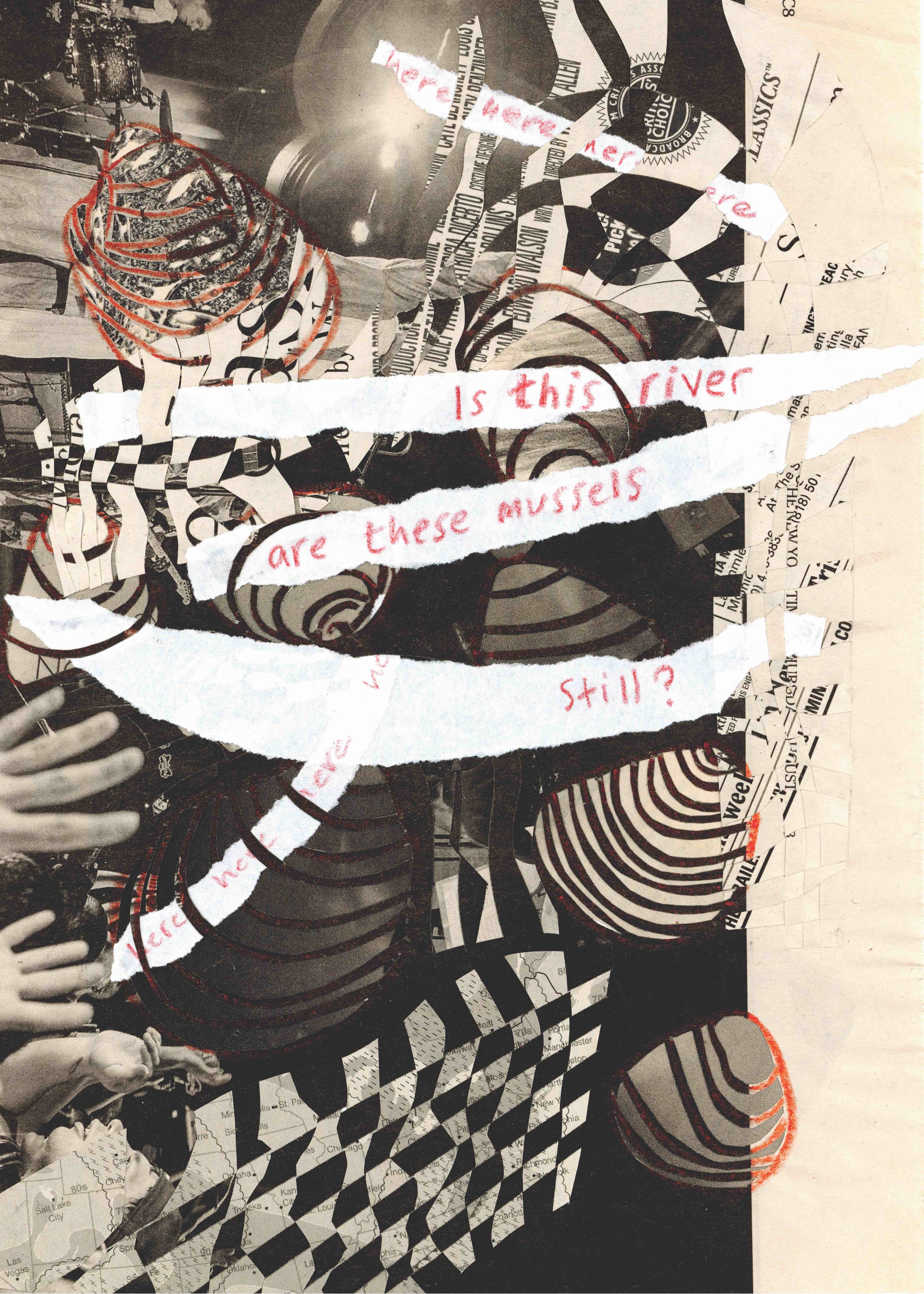
Delisted 2023’s other current tributary project, “Creative Commenting” is an experiment in using creative expression to center nonhuman beings in submissions to federal agencies and other during public comment periods. To date, this project has provided encounters with an orchid, utes ladies’ tresses; freshwater mussels, Chipola slabshell and fat threeridge, and the Virginia sneezeweed.
Why these 34 species, subspecies, morphs?
This list is a byproduct of the Fish and Wildlife Service (“FWS”) and the National Oceanic and Atmospheric Administration/Fisheries’ (“NOAA”) (collectively “Services”) implementation of the Endangered Species Act. In January 2023, the Services had removed, or proposed to remove, these species from the endangered species list for “extinction.”
These are not species participants initially chose to work with. Many were unknown to the artists, and none save a handful are subject popular treatments of the natural world.
Centering these species makes clear that all living forms are sacred. To work with these species involves encountering discomfort, the hidden, strange, and unknown; experiences necessary to discover the surprising, remarkable, multitudinous natures inherent in these nonhuman beings.
What is Delisting?
Delisted 2023 emerged in response to the Fish and Wildlife Service's (FWS) 2021 proposal to delist 23 species because it concluded they were extinct.
To delist a species is to remove it from the endangered species list and allocate related resources elsewhere.
From the early 1980s to 2021, the Services, FWS and the National Oceanic and Atmospheric Administration/Fisheries (NMFS), had delisted a total 11 species after concluding they were extinct. They had also delisted nearly 80 species because they concluded they had recovered.1
In 2023, FWS finalized the rule and removed 21 of the 23 species, withdrew the 22nd from consideration for delisting and held off on finalizing a decision on the 23rd.
The regulatory structure for delisting has changed multiple times in the last decade. Below I provide more information about the regulation and the changes.
Regulatory Framework for Delisting
The statutory language of the Endangered Species Act empowers the Services to delist species. However, specific reasons for delisting, e.g. extinction, and other details are governed by regulation.2
1984-2019
From 1984 to 2019 this regulation remained essentially unchanged.3 It directed the Services to delist extinct or recovered species, or those listed because of an error in the listing data or its interpretation.
The regulation required the Services conduct a review and substantially support their determination using the best scientific and commercial data available.
The regulation provided guidance for determining if a species was extinct stating that "a sufficient period of time must be allowed before delisting to indicate clearly that the species is extinct", "[u]nless all individuals of the listed species had been previously identified and located, and were later found to be extirpated from their previous range".
It similarly provided language identifying what had to support a determination that the species had recovered.
2019-2024
In 2019 the Services amended the rule.4 The new version directed the Services to delist species if they found "after conducting a status review based on the best scientific and commercial data available" that "the species is extinct", the species "does not meet the definition of an endangered species or a threatened species. . . .; or the "entity does not meet the statutory definition of a species."
The rule no longer included guidance for determining a species extinct and nor "recovery" as a reason for delisting. It also required less support from scientific and commercial data.
2024- Present
In 2024, the Services amended the rule again, requiring that the "best scientific and commercial data available substantiate" the decision. The current rule therefore requires a higher level of support for delistings than it did 2019-2024.
The 2024 amendments also add "recovery" back in as a reason for delisting. In the wake of these amendments, the FWS has issued multiple proposals to delist species because it considers them "recovered."
The amended rule does not bring back the guidance for determining a species is extinct.
About Delisted
Delisted 2023 is a creative communal emergent project engaging the extinction crisis.
Delisted 2023 recognizes that cultural, social and political ruptures between and among humans and nonhuman beings drives this and other crises. It approaches healing these ruptures and metabolizing ecological grief through relational and communal creative expression. By centering nonhuman others and the more than human world, Delisted 2023 provides a means for people to encounter the strangeness and beauty of these others in all of their dignity and autonomy.
Additionally, Delisted 2023 operates explicitly through engaging structures of power, particularly the law, and aims to provides ways to disrupt the anthropocentric and extractive nature of western law through creative disruption and countering legal narratives that strip away the inherent dignity of nonhuman and more than human beings.
Delisted 2023 is a creative and cross-disciplinary project but it rests on deeply rigorous understanding of knowledges and practices including de-colonial approaches to biology, ecology and evolutionary, as well as freely shared Indigenous Knowledges.
Delisted 2023 began in January 2023 with an ongoing tributary project for the members of 34 species, subspecies and morphs (collectively “species”) of plants, and nonhuman animals. Artifacts from the creative work of more than 40 artists, writers, and musicians
honoring these species and the other members of their ecological world will be published by The 3rd Thing Press in fall 2026, and included in an installation in Seattle, Washington at the same time. This website will host works and information dedicated to these species over the next year.
Delisted 2023’s other current tributary project, “Creative Commenting” is an experiment in using creative expression to center nonhuman beings in submissions to federal agencies and other during public comment periods. To date, this project has provided encounters with an orchid, utes ladies’ tresses; freshwater mussels, Chipola slabshell and fat threeridge, and the Virginia sneezeweed.


Why these 34 species, subspecies, morphs?
This list is a byproduct of the Fish and Wildlife Service (“FWS”) and the National Oceanic and Atmospheric Administration/Fisheries’ (“NOAA”) (collectively “Services”) implementation of the Endangered Species Act. In January 2023, the Services had removed, or proposed to remove, these species from the endangered species list for “extinction.”
These are not species participants initially chose to work with. Many were unknown to the artists, and none save a handful are subject popular treatments of the natural world.
Centering these species makes clear that all living forms are sacred. To work with these species involves encountering discomfort, the hidden, strange, and unknown; experiences necessary to discover the surprising, remarkable, multitudinous natures inherent in these nonhuman beings.